Poland and Poles in the Georgian consciousness
How has Poland been remembered in Georgia? A story of nearly two centuries of encounters, inspirations and mutual perceptions – from nineteenth-century national movements to the realities of Soviet propaganda and “cultural contraband”.
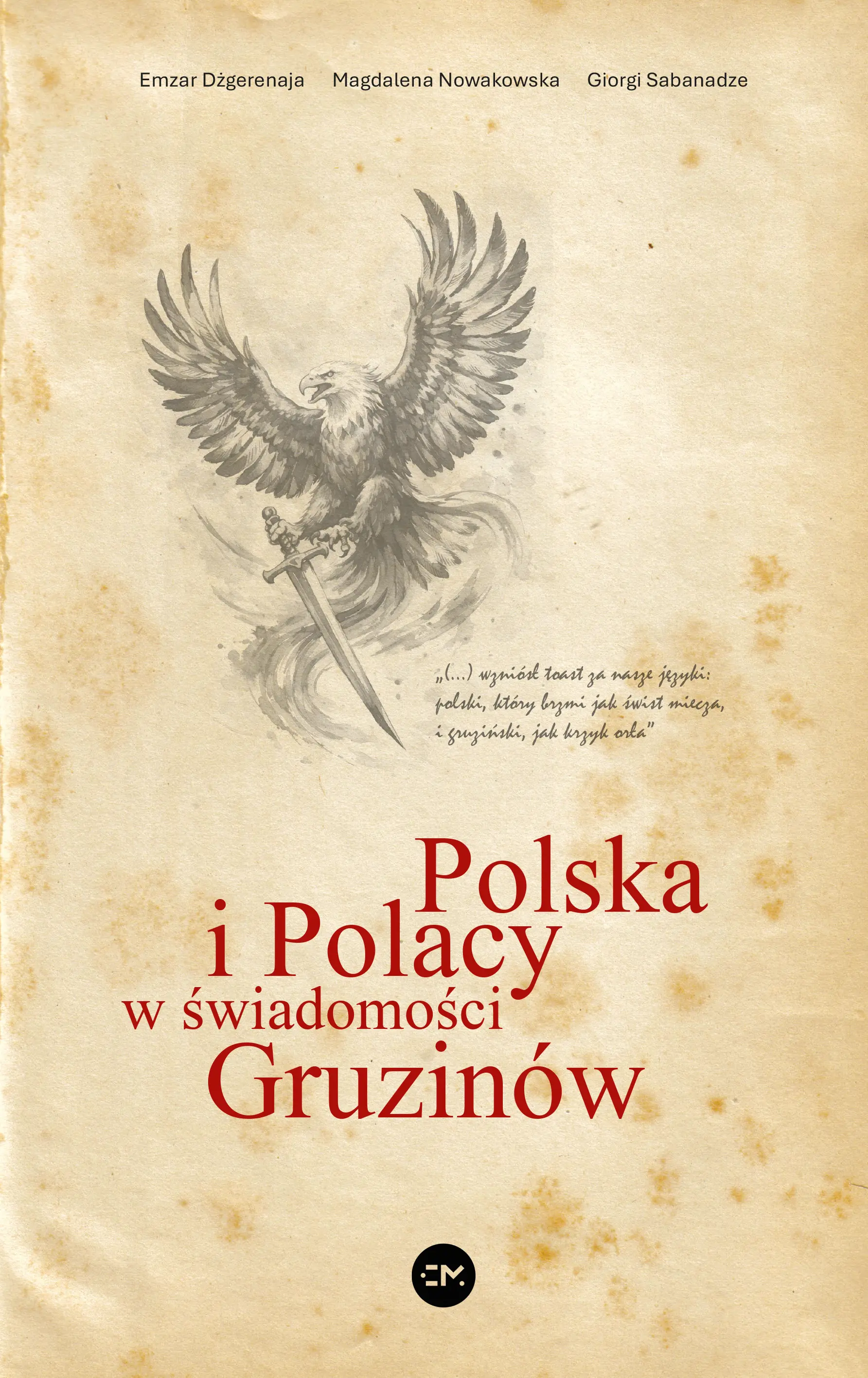
"Poland and Poles in the Georgian consciousness" by Emzar Jgerenaia, Magdalena Nowakowska and Giorgi Sabanadze tells the story of nearly two centuries of Polish-Georgian relations from a Georgian perspective. The authors explore the place that Poland and Poles occupied in the imagination of Georgian elites and society, and how their image changed under the influence of political events, Tsarist and Soviet censorship and propaganda, as well as direct contacts, literature and culture.
The story begins in the nineteenth century. Georgian intellectuals closely followed Polish aspirations for independence, and the Polish national movement became an important point of reference in their thinking about Georgia’s own national revival. Poland was seen as an example of a society that, despite Russian domination, preserved its identity and refused to abandon its pursuit of freedom. The Georgian press reported on the January Uprising and described the involvement of different social groups in the struggle against Tsarist rule, while Ilia Chavchavadze – one of the leading figures of the Georgian national revival – translated Mickiewicz while still a student in St Petersburg.
Poland represented more than simply an example of a struggle for independence. For Georgian elites, it also served as a European point of reference. This perception persisted into the Soviet era. Although Poland became part of the communist bloc, in the Georgian consciousness it never entirely lost its European status. As the authors point out, for Georgians in the nineteenth century and later, Europe began where the Russian, and subsequently Soviet, empire ended.
The second part of the book takes the reader to Georgia under communist rule and examines how perceptions of Poland changed following the Sovietisation of Georgia in 1921. How did the Georgian press portray Poland over the following decades? How did Soviet propaganda construct the official narrative of the “friendship of socialist nations”? And what can be discovered beneath this layer of propaganda about how Georgians actually perceived Poland? By analysing the press, travel accounts, literature and cultural exchange, the authors seek to uncover traces of authentic relations between people and cultures beneath the official narrative.
One of the book’s most compelling themes is what the authors call “cultural contraband” – the circulation of inconvenient, suppressed or officially prohibited content through literature, film, music and art. Culture made it possible to cross the boundaries imposed by official propaganda and helped ideas circulate behind the Iron Curtain.
The publication is based on research and analysis of materials held in Georgian archives, memory institutions and museums. In addition to historical analysis, it includes selected primary-source texts translated into Polish. These sources allow readers to see Poland through Georgian eyes and trace how perceptions of Poland and Poles evolved over successive decades.