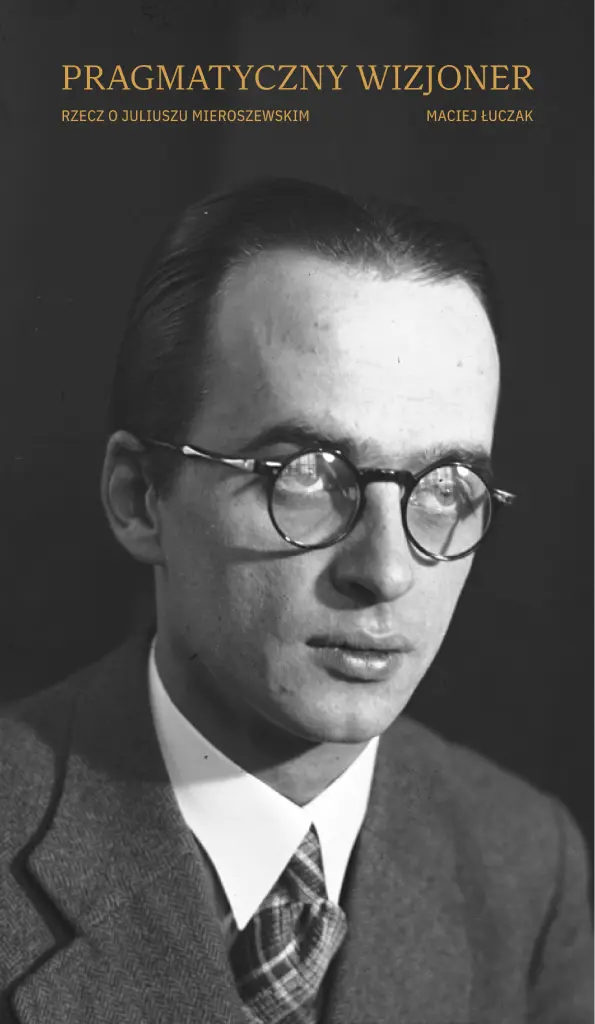
Juliusz Mieroszewski 1906-1976
A voice we need again, because the questions he asked have returned with renewed urgency.
In 2026, we commemorate the 120th anniversary of the birth and the 50th anniversary of the death of Juliusz Mieroszewski – one of the most influential Polish political thinkers of the twentieth century. This is an opportunity to rediscover his ideas and a way of thinking that remains strikingly relevant in understanding the world today.
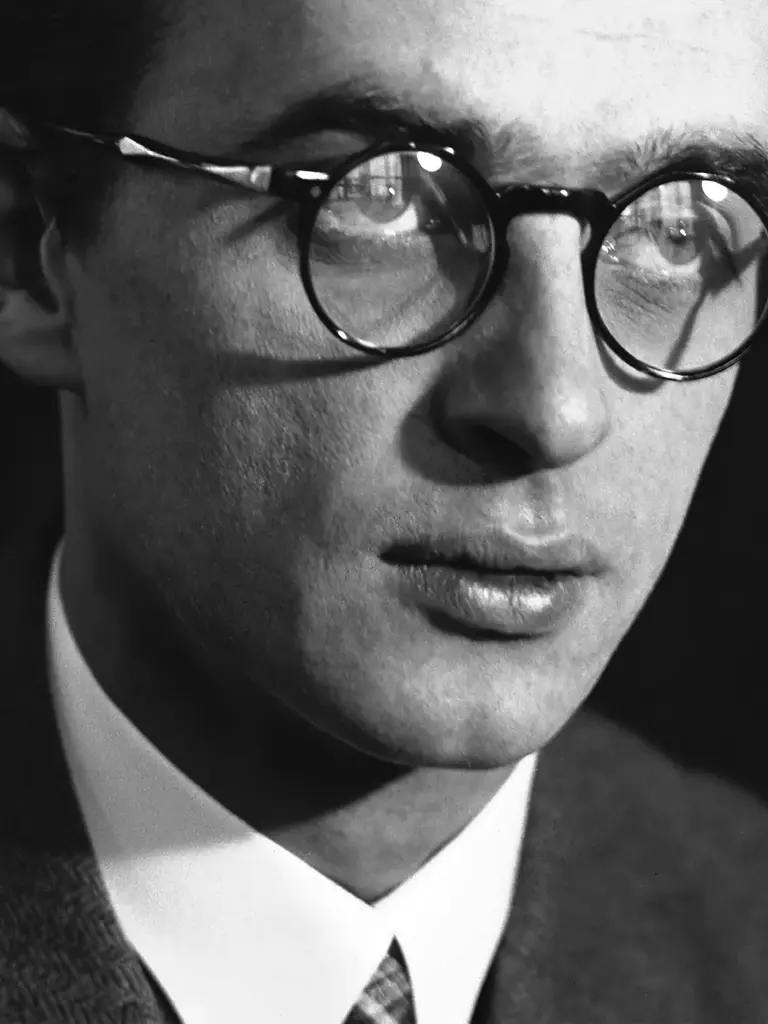
Juliusz Mieroszewski was one of the most important Polish political thinkers of the twentieth century, a columnist for the Paris-based Kultura, and Jerzy Giedroyc’s closest collaborator. For almost three decades, he helped shape one of the most important intellectual circles of the Polish émigré community. His writings had a lasting impact on how Poland thinks about its relations with Ukraine, Lithuania, Belarus, and Russia.
He was an independent and uncompromising intellectual. He did not cling to dogmas or political illusions. He believed that realism required, above all, an accurate assessment of reality and a readiness to revise one’s views when the facts changed.
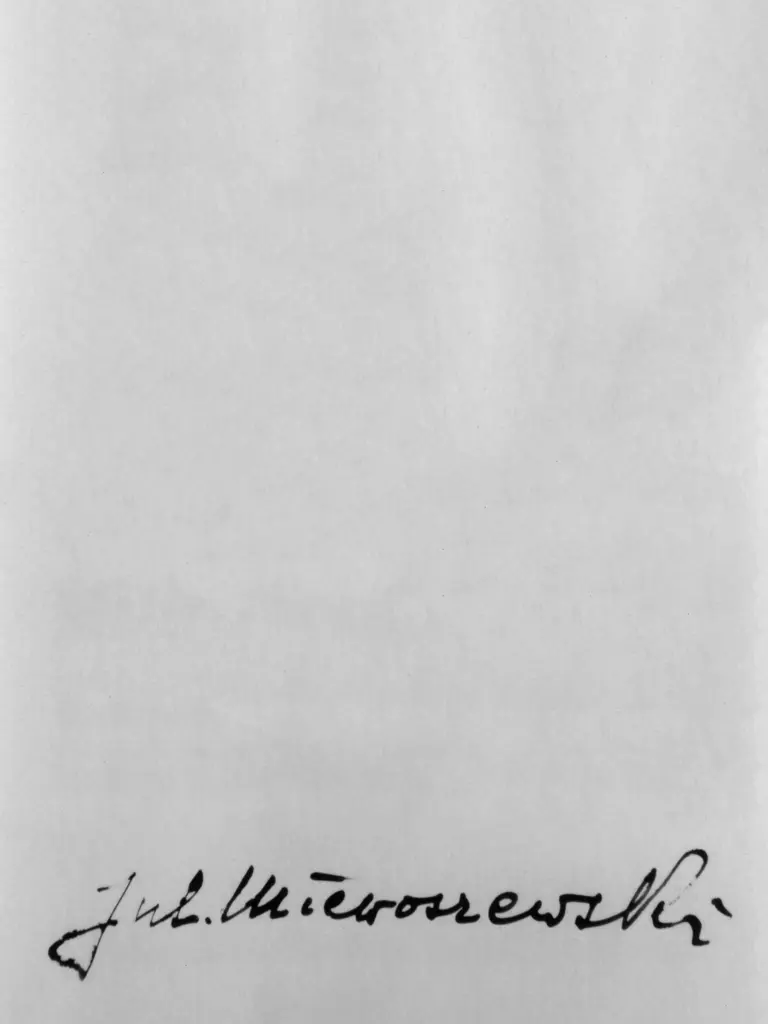
Juliusz Mieroszewski focused on Poland’s relations with Ukraine, Lithuania, Belarus, and Russia long before these issues became central to European debate. He wrote about the future of Eastern Europe, political realism, the responsibility of elites, and how to build national security without seeking dominance over neighbouring countries.
He was not interested in ready-made political formulas. What mattered most to him was a way of thinking about politics—free from dogma, grounded in a careful analysis of reality, and open to revising one’s own assumptions.
This approach shaped his views on Poland’s relations with Ukraine, Lithuania, and Belarus. He believed that Poland’s security was inseparable from the independence of its neighbours and from building partnerships based on mutual respect.
Mieroszewski opposed political illusions and argued that lasting agreements are built not through domination, but through mutual understanding.
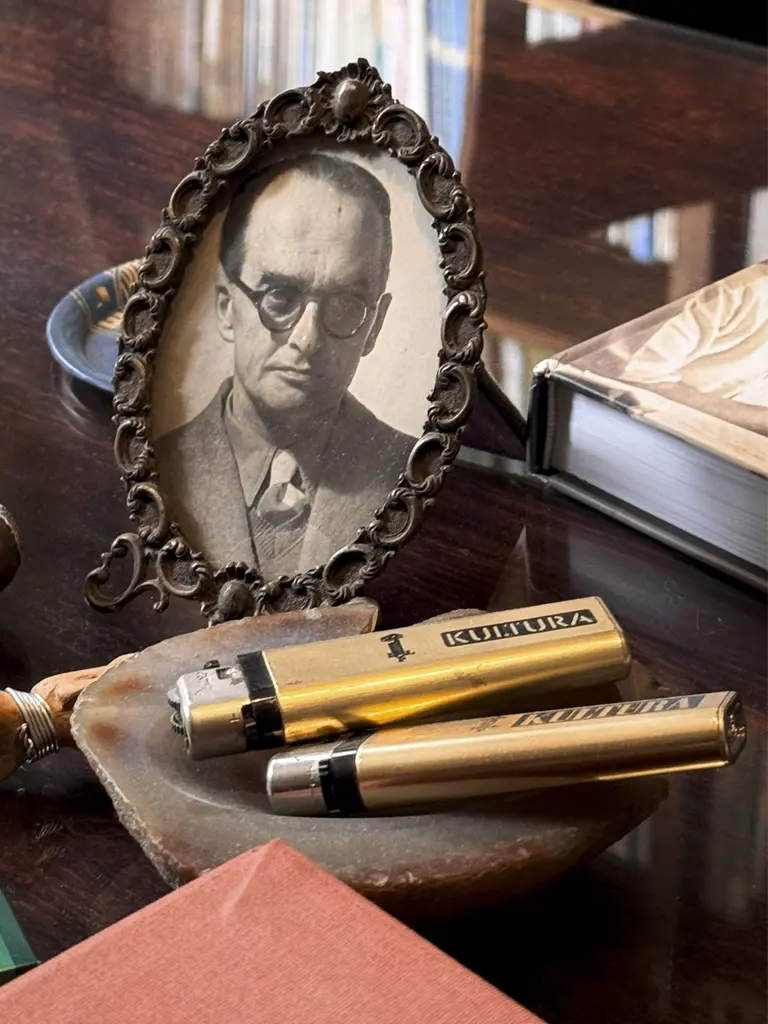
Juliusz Mieroszewski remains important because he taught us to recognise the processes that shape the future, rather than simply react to current events. As he wrote: “The same plan or proposal that is unattainable today may, in two years’ time—in a changed situation—become a realistic proposition.” For him, realism did not mean attachment to previously held convictions, but the ability to recognise new circumstances and draw the appropriate conclusions from them.
He was interested in social transformations, the evolution of states, shifts in the balance of power, and their long-term consequences for Poland. He believed that responsible political thought requires a willingness to revise one’s own judgments when reality changes.
That is why his writings are not a collection of forecasts or ready-made formulas. They are an invitation to think about politics as the art of understanding reality—from the perspective of responsibility for the future of the state and its place in the world.

Juliusz Mieroszewski’s ideas cannot be separated from his life story. His pre-war journalistic career, the experience of war, life in exile, and his long collaboration with the Paris-based Kultura taught him to view politics through the lens of facts, historical processes, and changing circumstances.
He was not a theorist detached from history. His thinking emerged from direct experience of the collapse of an old political order and the search for a new one.
The Second World War revealed to him how fragile a seemingly stable world could be. Exile allowed him to look at Polish affairs from a broader perspective—without illusions, yet without abandoning the possibility of shaping the future.
At Kultura, he developed his ideas on Russia, Ukraine, Lithuania, Belarus, and Eastern Europe, constantly testing them against political reality and changing historical conditions.
He was not a politician in the party-political sense, nor was he a state decision-maker. Juliusz Mieroszewski was above all a journalist, columnist, analyst, and political writer. Before the war, he worked in the press; shortly before 1939, he served as the Bucharest correspondent of Ilustrowany Kurier Codzienny and as press attaché at the embassy. After the Second World War, he remained in exile and became associated with the Paris-based Kultura.
For more than a quarter of a century, Juliusz Mieroszewski was the most important political columnist of the Paris-based Kultura and one of Jerzy Giedroyc’s closest collaborators. It was in the pages of the monthly that he published his most important analyses of Eastern Europe, Russia, the West, and Poland’s place in the post-war world.
Mieroszewski was one of the few Polish émigré columnists who did not try to recover the world of before 1939. Instead of thinking about how to restore the old order, he asked what the future Europe would look like and what place Poland could occupy within it.
Mieroszewski does not fit neatly into the simple division between idealist and realist. He was a realist because he believed that politics must begin with an accurate assessment of reality, the balance of power, and one’s own limitations.
Juliusz Mieroszewski belongs to those figures in Polish intellectual history who are both present and absent. Present, because his thought entered the Polish political language and shaped ways of thinking about Russia, Ukraine, Lithuania, and Belarus. Absent, because Mieroszewski’s name itself remains little known outside specialist circles.
Yes. Juliusz Mieroszewski was among the first Polish translators of George Orwell and played an important role in introducing Orwell’s work to Polish readers. In 1953, his translation of Nineteen Eighty-Four—one of the most important political novels of the twentieth century—was published in Kultura’s book series.
He was not a politician in the party-political sense, nor was he a state decision-maker. Juliusz Mieroszewski was above all a journalist, columnist, analyst, and political writer. Before the war, he worked in the press; shortly before 1939, he served as the Bucharest correspondent of Ilustrowany Kurier Codzienny and as press attaché at the embassy. After the Second World War, he remained in exile and became associated with the Paris-based Kultura.
For almost thirty years, he commented on international affairs, analysed the future of Eastern Europe, and sought answers to the question of how Poland could regain agency in a world dominated by the Yalta order. His writings dealt with Poland’s relations with Russia, Ukraine, Lithuania, and Belarus, Poland’s place in Europe, and the principles of effective state policy.
He did not hold power, but he influenced the way several generations of Polish political and intellectual elites thought. He was not a politician, but he dealt with politics throughout his life. The difference was that he was interested not in gaining power, but in understanding reality.
For more than a quarter of a century, Juliusz Mieroszewski was the most important political columnist of the Paris-based Kultura and one of Jerzy Giedroyc’s closest collaborators. It was in the pages of the monthly that he published his most important analyses of Eastern Europe, Russia, the West, and Poland’s place in the post-war world.
Historians sometimes describe him as Jerzy Giedroyc’s porte-parole — the spokesman and interpreter of Kultura’s political programme. This does not mean, however, that he merely carried out someone else’s ideas. Mieroszewski retained his intellectual independence, and many of the ideas now associated with Kultura’s political line emerged precisely from the dialogue between him and Giedroyc.
The editor-in-chief of Kultura particularly valued his way of thinking and his writing style. As he recalled:
“He was one of the few Polish columnists with an exceptionally concise, restrained, and sober style. What was typical of him was very cool reasoning.”
After Mieroszewski’s death, the magazine’s collaborators stressed that “a part of Kultura died” with him. He was not only an author of political commentaries, but also one of the main co-creators of the way of thinking that distinguished that milieu.
Mieroszewski was one of the few Polish émigré columnists who did not try to recover the world of before 1939. Instead of thinking about how to restore the old order, he asked what the future Europe would look like and what place Poland could occupy within it.
At a time when many political émigrés regarded the post-war borders as temporary, he believed that politics had to be based on reality, not nostalgia. That is why, already in the 1960s and 1970s, he wrote about Ukraine, Lithuania, and Belarus as nations with the right to their own political agency.
His approach to politics was equally distinctive. He was not interested in predicting the next events or creating striking slogans. He tried to identify long-term historical processes. This allowed him to recognise the weakness of empires and the importance of national movements in Eastern Europe long before the collapse of the Soviet Union.
He was also distinguished by his intellectual independence. He did not cling to previously held views when reality provided new arguments. He believed that the task of a columnist was not to confirm one’s own convictions, but to constantly confront them with the facts.
Mieroszewski does not fit neatly into the simple division between idealist and realist. He was a realist because he believed that politics must begin with an accurate assessment of reality, the balance of power, and one’s own limitations.
Yet he was neither a cynic nor an advocate of passive adaptation to the stronger side. He believed that realism did not mean giving up on values. On the contrary, politics should serve the cause of freedom, but it must seek means that can genuinely change the situation.
As he wrote, realism consists above all in an “accurate assessment of reality.” In this sense, he can be described as a realist in his choice of means and an idealist in his aims. He wanted a free Poland and a free Eastern Europe, but he knew that the mere justice of a cause did not guarantee success.
Juliusz Mieroszewski belongs to those figures in Polish intellectual history who are both present and absent. Present, because his thought entered the Polish political language and shaped ways of thinking about Russia, Ukraine, Lithuania, and Belarus. Absent, because Mieroszewski’s name itself remains little known outside specialist circles.
For most of his life, he was an émigré writer. He published his most important texts in the Paris-based Kultura, which was censored in communist Poland and reached readers only through limited circulation.
Nor did he leave behind a single work that entered the broader public imagination. His legacy consists of hundreds of articles, essays, and commentaries written over nearly thirty years.
The paradox is that many of the ideas with which he is now associated have become better known than the name of their author.
Yes. Juliusz Mieroszewski was among the first Polish translators of George Orwell and played an important role in introducing Orwell’s work to Polish readers. In 1953, his translation of Nineteen Eighty-Four—one of the most important political novels of the twentieth century—was published in Kultura’s book series.
This was no coincidence. Mieroszewski was deeply interested in the mechanisms of totalitarian systems, propaganda, the manipulation of language, and the influence of ideology on the way people think. In Orwell’s writings, he recognised many of the same issues that he analysed as a political commentator.
This lesser-known aspect of his biography reveals Mieroszewski as a careful reader of political literature and a thinker who understood that the struggle for freedom also begins with language, concepts, and the way reality is described.
Mieroszewski did not think about Russia in terms of a simple division between sympathy and hostility. He was neither “pro-Russian” nor “anti-Russian.” What concerned him above all was Poland’s national interest and the question of whether Russia could cease to be an empire.
Ukraine occupied a special place in Mieroszewski’s thinking because, without its political agency, it was difficult to imagine a lasting change in the balance of power in Eastern Europe. He did not see the Ukrainian question as a secondary issue in Poland’s relations with Russia, but as one of the conditions for a future order in the region.
Mieroszewski started from a simple yet, at the time, far from obvious assumption: Poland could not be secure if the space between it and Russia remained inhabited by nations deprived of their own political agency. For him, Ukraine, Lithuania, and Belarus were not peripheral to Polish policy; they were a crucial part of the balance of power in Eastern Europe.
ULB is an acronym formed from the names of three nations and countries: Ukraine, Lithuania, and Belarus. Mieroszewski believed that Poland’s future was inseparably linked to the future of these countries and to their relations with Russia.
The ULB concept was controversial because it required Poles to fundamentally rethink their view of the East. Mieroszewski argued that Poland should unequivocally recognise the right of Ukrainians, Lithuanians, and Belarusians to their own statehood, while at the same time abandoning any idea of Lviv and Vilnius as objects of future political claims.
We return to Mieroszewski not only because many of his observations about Eastern Europe proved remarkably insightful. More importantly, he left behind a distinctive way of thinking about politics in times of change.
Reading Mieroszewski teaches a way of thinking about politics that combines realism, responsibility, and imagination. It helps us look at contemporary challenges not only through the lens of current crises, but also in the context of longer historical processes.
Mieroszewski did not think about Russia in terms of a simple division between sympathy and hostility. He was neither “pro-Russian” nor “anti-Russian.” What concerned him above all was Poland’s national interest and the question of whether Russia could cease to be an empire.
He believed that a lasting reconciliation between Poland and Russia would be possible only when Russia recognised the agency of the nations of Eastern Europe—above all Ukraine, Lithuania, and Belarus. He did not believe that relations between Warsaw and Moscow could be repaired over the heads of these nations or by treating their aspirations as Russia’s internal affair.
For this reason, he opposed both Polish servility towards Russia and a policy based solely on hostility. He argued that Poland should not seek the “elimination of Russia,” but rather a transformation of Eastern Europe that would put an end to the imperial rivalry over the space between Poland and Russia.
Mieroszewski did not rule out the possibility of understanding between Poles and Russians. The condition for such an understanding, however, was the recognition of other nations’ right to sovereignty. Without it, any discussion of Polish-Russian reconciliation remained a political illusion.
Ukraine occupied a special place in Mieroszewski’s thinking because, without its political agency, it was difficult to imagine a lasting change in the balance of power in Eastern Europe. He did not see the Ukrainian question as a secondary issue in Poland’s relations with Russia, but as one of the conditions for a future order in the region.
He believed that without recognising Ukrainians’ right to their own statehood, Poland would be unable to pursue an effective eastern policy. A free Ukraine would limit the possibility of rebuilding a Russian empire while opening the way to a different model of relations in Eastern Europe.
This conviction led him to argue that Poland should view Ukraine not through the prism of lost territories, but as a distinct nation with the right to determine its own political future.
That is why the Ukrainian question occupied such an important place in his thinking. For Mieroszewski, it was not merely one political issue among many, but one of the foundations of Poland’s security and a key to understanding the future of Eastern Europe.
Mieroszewski started from a simple yet, at the time, far from obvious assumption: Poland could not be secure if the space between it and Russia remained inhabited by nations deprived of their own political agency. For him, Ukraine, Lithuania, and Belarus were not peripheral to Polish policy; they were a crucial part of the balance of power in Eastern Europe.
He believed that as long as these nations remained subordinate to Moscow, Russia would retain its imperial character and its ability to exert pressure on Poland. If, however, they became politically independent, they would not only be Poland’s neighbours but also co-creators of a new order in the region.
For this reason, he rejected thinking about the East in terms of lost territories, former borders, or historical superiority. Poland could credibly demand freedom for itself only if it recognised the right of other nations to the same freedom.
In this sense, the freedom of Ukraine, Lithuania, and Belarus was, for him, a condition of Poland’s security. It was not a gesture of goodwill but a realistic assessment of the situation: Poland could be secure only in an Eastern Europe made up of sovereign states, not nations dependent on an empire.
ULB is an acronym formed from the names of three nations and countries: Ukraine, Lithuania, and Belarus. Mieroszewski believed that Poland’s future was inseparably linked to the future of these countries and to their relations with Russia.
At a time when Ukraine, Lithuania, and Belarus were part of the Soviet Union, he argued that Poland should recognise their right to self-determination and treat them as distinct political partners. This was a groundbreaking position, as it required abandoning ways of thinking rooted in former borders and historical claims.
At the heart of the ULB concept was the conviction that Poland could not be secure as long as the nations of Eastern Europe remained subordinate to the Russian empire. The independence of Ukraine, Lithuania, and Belarus would create the conditions for a more stable and cooperative order in the region.
The ULB concept was not, however, a ready-made political programme or a project for creating a common state. Above all, it was a way of thinking about relations among the nations of Eastern Europe—one based on recognising their agency, rejecting imperial ambitions, and believing that security can be built through cooperation rather than domination.
The ULB concept was controversial because it required Poles to fundamentally rethink their view of the East. Mieroszewski argued that Poland should unequivocally recognise the right of Ukrainians, Lithuanians, and Belarusians to their own statehood, while at the same time abandoning any idea of Lviv and Vilnius as objects of future political claims.
For many émigré circles, this was difficult to accept. After 1945, the loss of the eastern territories of the Second Polish Republic remained one of the most painful experiences in modern Polish history, and part of the émigré community regarded the post-war borders as temporary and imposed. In this context, the position of Kultura could be seen as accepting the consequences of the war, Yalta, and Soviet domination.
Mieroszewski saw the issue differently. He believed that Russian imperialism could not be countered by a Polish imperialism of another kind. If Poland expected Russia to renounce its domination over Ukraine, Lithuania, and Belarus, it also had to abandon the idea of these nations as objects of its own historical rights or influence.
The debate over ULB was therefore not simply a dispute about borders. It was a debate about whether Polish eastern policy should remain a hostage to a lost past or become an attempt to build a future order in Eastern Europe. In this sense, the controversial nature of the concept lay in the fact that Mieroszewski demanded from Poles not only political realism, but also a reassessment of their own national habits and assumptions.
We return to Mieroszewski not only because many of his observations about Eastern Europe proved remarkably insightful. More importantly, he left behind a distinctive way of thinking about politics in times of change.
He was interested not in repeating established formulas, but in understanding historical processes: how balances of power shift, how ideas mature, and how nations regain their agency. That is why his writings are more than commentaries on the Cold War or émigré political debates. They also serve as a school of strategic thinking.
Mieroszewski reminded his readers that realism does not mean abandoning values or passively adapting to stronger powers. It means accurately assessing reality, understanding one’s own limitations, and seeking actions that can shape developments over the long term. As he wrote, realism consists above all in an “accurate assessment of reality.”
His thought resonates today because we are once again asking questions about Poland’s security, the future of Ukraine, the imperial character of Russian policy, and the place of Eastern Europe in the European order. Mieroszewski does not provide ready-made answers to contemporary challenges. What he offers instead is a reminder that politics requires intellectual courage, precision of language, and the ability to think beyond the next crisis.
Reading Mieroszewski teaches a way of thinking about politics that combines realism, responsibility, and imagination. It helps us look at contemporary challenges not only through the lens of current crises, but also in the context of longer historical processes.
For Mieroszewski, politics required an understanding of change, patience, and a willingness to revise one’s own assumptions when reality changed. What mattered was a constant reading of circumstances: the balance of power, the scope for action, the limits of one’s own influence, and the agency of neighbouring nations. He thought in terms of processes rather than isolated events, which is why he was interested not only in what was possible today, but also in what could become realistic in a changed situation.
That is why Mieroszewski is worth reading as a demanding interlocutor. He compels us to ask questions about Poland, Eastern Europe, and what realism truly means in times of profound international change.
The Russian “Polish Complex” and the ULB Area is Mieroszewski’s best-known essay and one of the most important articles ever published in the history of the Paris-based Kultura. In this text, he explains why Poland’s future is inseparably linked to the political agency of Ukraine, Lithuania, and Belarus, and why lasting relations with Russia require abandoning imperial thinking—both Russian and Polish. It is here that the ULB concept finds its fullest expression.
Read the article in the archives of the Literary Institute →
Juliusz Mieroszewski, The Russian “Polish Complex” and the ULB Area, Kultura, no. 9 (324), Literary Institute, Paris, September 1974.
A Discourse on Method (1967) – a short but exceptionally important text that reveals what political realism meant to Mieroszewski. Here we find his most influential reflections on the need to adapt political thinking to changing realities, as well as on responsibility for one’s words and for the assessment of facts.
Read it in the archives of the Literary Institute →
Juliusz Mieroszewski, A Discourse on Method, in: Political Neuroses, Literary Institute, Paris, 1967.
For many years, Mieroszewski published his famous Letters from the Island in Kultura—analyses of political developments observed from Great Britain. They are one of the best ways to see him as a columnist responding to current events while also developing a broader political diagnosis.
View them in the archives of the Literary Institute →
Juliusz Mieroszewski, Letters from the Island, Kultura, Literary Institute, Paris, 1953–1976.
Old Wine in New Bottles (1969) – a text devoted to Russian policy, the changes taking place in the Soviet Union, and ways of thinking about Russia. It clearly shows that Mieroszewski was neither a Russophobe nor an uncritical advocate of dialogue, but an analyst seeking to understand the mechanisms of Russian policy.
Read the article in the archives of the Literary Institute →
Juliusz Mieroszewski, Old Wine in New Bottles, Kultura, no. 9 (260), Literary Institute, Paris, September 1969.
Materials for Reflection and Contemplation (1976) – a collection of texts published near the end of Mieroszewski’s life. It offers a clear view of the most important themes in his thinking: political realism, the responsibility of elites, Poland’s relations with its neighbours, and the future of Eastern Europe. It is the best starting point for readers who want to explore his work more broadly than through a single article.
Read it in the archives of the Literary Institute →
Juliusz Mieroszewski, Materials for Reflection and Contemplation, Literary Institute, Paris, 1976.